

- 26. May 2026
EASI ZERo: Proving low-carbon building energy renovation works
The Horizon Europe project EASI ZERo, concluding in May 2026, demonstrates how bio-based, low-carbon and recycled materials can be combined into a complete renovation system that cuts both energy use and carbon emissions in real-world conditions.
Buildings account for 40% of Europe's energy consumption and energy renovating them is central to meeting the EU's 2030 and 2050 climate goals. But energy renovation is about more than just insulation and new windows if you truly want to reduce climate impact. By using materials with a low CO₂ footprint, both operational energy and resource consumption can be reduced.
Since 2022, 16 partner organisations from across Europe have worked together to develop and validate low-carbon solutions for energy renovation of buildings. The consortium combines research and technology organisations, universities, engineering companies, industrial manufacturers and market experts. This multidisciplinary approach has been central to the project’s ambition of creating new sustainable materials and testing them in realistic construction settings to help prepare them for uptake by the market.
As Arnaud Jay from CEA-Liten, project coordinator of EASI ZERo, explains:
“One of the biggest challenges in sustainable construction innovation is demonstrating that newly developed building materials can work together in real renovation projects. EASI ZERo has focused on this important step from research to application, showing how promising solutions can move from the lab to reliable use on the building site.”
Envelope system for efficient renovation and zero energy buildings
EASI ZERo focuses on a complete building envelope solution for energy renovation, with the aim of reducing dependence on conventional carbon-intensive materials while improving energy performance and a healthier indoor environment.
“Our aim in this project is to go a step further. It is not just enough to do energy renovation, you should also do it with the right materials,” says Thue Trofod from EASI ZERo partner Danish Technological Institute.
The system includes a range of bio-based, low-carbon and recycled solutions:
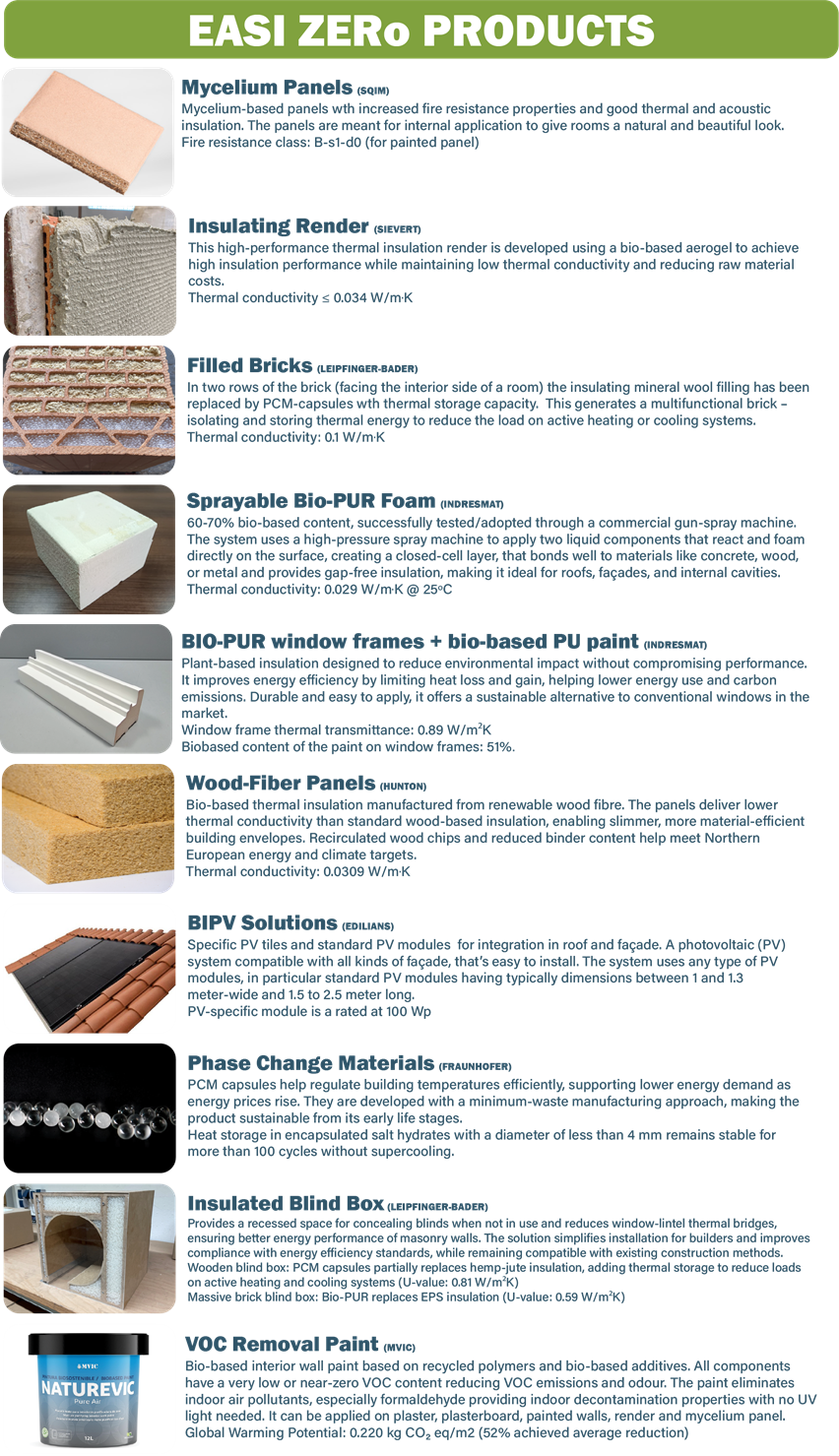
Together, these solutions address facades, roofs and openings, providing an integrated approach to renovation. By incorporating reused components and recycled materials, EASI ZERo also supports circularity, helping to close material loops and strengthen resilience across the construction value chain.
Designed for both indoor and outdoor renovation works, the solutions are intended to be adaptable to different building typologies and contexts. Their objectives align closely with the Energy Performance of Buildings Directive (EPBD), particularly in relation to zero-emission buildings, deep renovation and improved indoor environmental quality.
Testing sites across Europe show significant sustainability benefits
A key strength of EASI ZERo is its focus on validation in real-life conditions. Over the past year, the project’s products have been simulated and evaluated in pilot buildings in Norway, France and Germany, generating data on performance and environmental impact across different climates and building types. These demonstrations are turning promising innovation into scalable construction applications.
LCAs have been conducted on these demo sites, and preliminary results from the simulations on real use cases are encouraging, with significant reductions in energy consumption and carbon emissions. Firdaous Akzoun, energy consultant at Oteis / Elithis says:
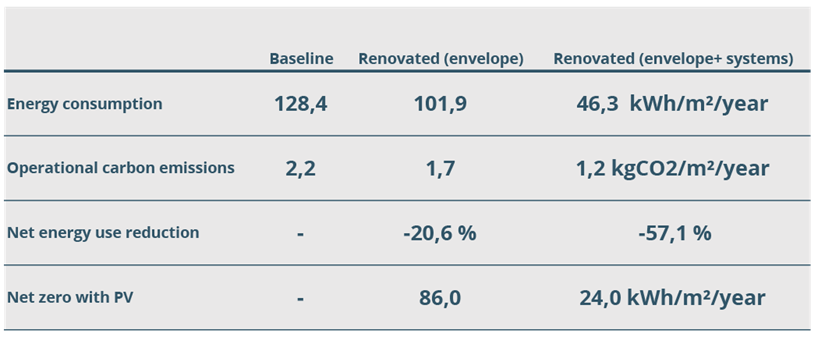
"Our simulations show that the EASI ZERo products can significantly reduce energy consumption, along with a clear decrease in CO2 emissions. For the three demos we are working on in the projects, we observe between 20 to 50% of energy savings. So, the solutions confirm that they are effective and they can deliver a strong benefit.”
This is exemplified in the table below, showcasing results from the case in Norway, a detached house retrofitted with mycelium panels, bio-PUR window frames, wood-fiber panels, and exterior insulating render.
Another modeling case in France shows how retrofitting multi-family dwellings with EASI ZERo products will reduce CO2-emissions compared to retrofitting with conventional products.
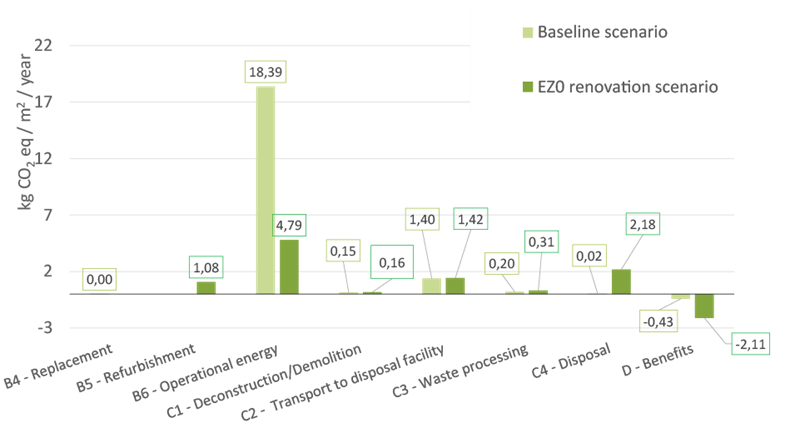
This marks an important step towards improving the energy performance of existing buildings and supporting Europe’s transition to a more sustainable built environment, needed to meet climate goals for 2030 and 2050.
As Benedikt Schug from EASI ZERo partner Fraunhofer explains:
“We have successfully validated the benefits of sustainability and innovative materials in practical construction applications.”
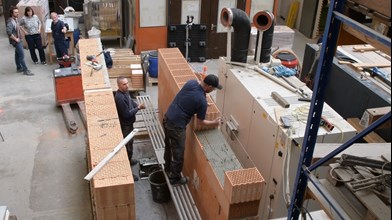
Fraunhofer develops phase-change material capsules, one of the most novel materials in the project, which are produced with low-waste manufacturing methods. They can improve the thermal regulation of buildings drastically and are used in several areas of the EASI ZERo system, both as insulation in hollow bricks, and in blind boxes.
Demonstrating high performance in everyday construction
For the project partners, one of the most important achievements has been proving that these materials can perform in everyday construction practice, on the same level as other materials.
As Franziska Endres from EASI ZERo partner Sievert, who in the project developed and tested a high performing insulating thermal insulation render with bio-based aerogel, notes:
“For me, the project’s greatest success is that we have demonstrated that sustainable, bio-based materials can indeed meet the high standards for performance and workability required in everyday construction, while simultaneously reducing the carbon footprint over their entire lifecycle. For me personally, it was a milestone to see that our solutions work not only in theory but also in practical applications.”
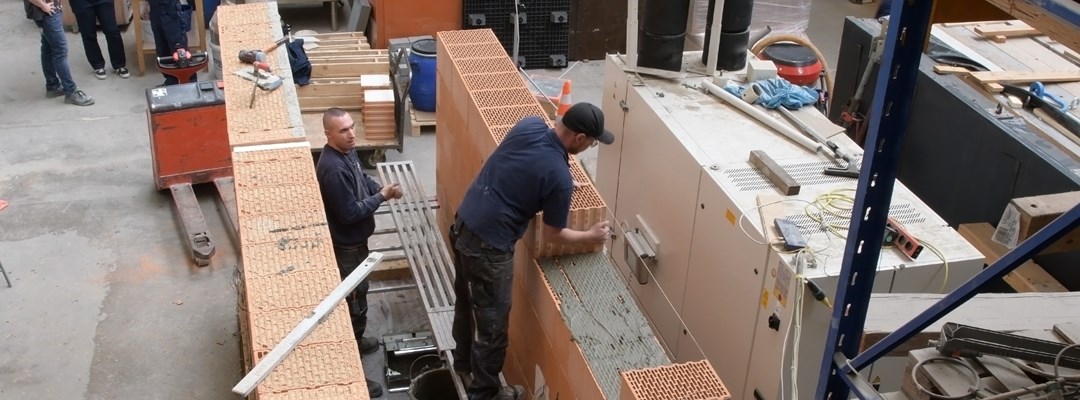
The materials have undergone rigorous testing in controlled environments at wall scale, while other facilities allowed to test components in real outdoor environment. One of these tests simulates weather conditions such as rain and fluctuating temperatures at EASI ZERo partner Materials Testing Institute at the University of Stuttgart, Germany.
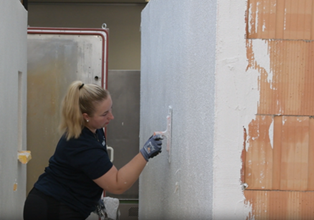
Dr. Marina Stipetic from the Materials Testing Institute is positive about the results:
“This test brings promising results for all installed EASI ZERo products, and I’m pretty sure to see them soon on the market.”
The emphasis on practicality is what makes EASI ZERo especially relevant for early market adopters at this stage in the project.
Next steps: Getting market-ready
At the end of the project, several of the EASI ZERo products are showing strong potential for early market uptake. In recent months, project partners have organised stakeholder workshops, both online and in person, to share results, gather feedback and discuss pathways to adoption. These exchanges with industry stakeholders are an important part of ensuring that the project’s results do not stop at the demonstration stage but can continue towards commercial deployment.
Through the EASI ZERo Academy - a series of workshops - project partners engaged with architects, manufacturers, and policymakers to discuss the transition from research to commercial use. While interest in low-carbon materials is high, the discussions highlighted key practical challenges, particularly the need for upfront affordability for building owners and the complexity of navigating European certification processes. However, participants agreed that EASI ZERo’s real-world performance data is a crucial step in building market trust. Addressing these regulatory and economic factors through coordinated collaboration across the construction sector remains the essential next step to scale these innovations.
Project coordinator Arnuad Jay reflects on the project:
"I am incredibly grateful to have been part of such a meaningful innovation project, and I look forward to see EASI ZERo solutions on construction sites and in buildings around Europe in the coming years.”
To mark the end of the project, EASI ZERo will host its final event in Brussels and online on 28 May 2026, where participants will be able to discover real-life prototypes, learn more about the project results and connect with the consortium and other stakeholders. Sign up here
Project facts
Project start: December 2022. Project end: May 2026
Partners:
- Commissariat à l'Énergie Atomique et aux Énergies Alternatives (CEA), France (project coordinator)
- Danish Technological Institute (DTI), Denmark
- Fraunhofer Institute for Silicate Research (ISC), Germany
- Leitat (LTAT), Spain
- SINTEF AS (SINTF), Norway
- University of Stuttgart (USTU), Germany
- Indresmat Sl (INDRE), Spain
- SQIM, Italy
- Sievert Baustoffe SE & Co. KG (SIEVR), Germany
- Edilians (EDIL), France
- Bollerup Jensen A/S (BJ), Denmark
- Leipfinger-Bader (LFB), Germany
- Buildings Performance Institute Europe ASBL (BPIE), Belgium
- Hunton Fiber AS (HUNT), Norway
- Pintures M. Vich, S.A. (MVIC), Spain
- Oteis - Elithis Solutions (ELIT), France
EASI ZERo is funded by the European Union from the European Union’s Horizon Europe research and innovation programme under grant agreement No. 101091531.